
Why Sublingual Supplement Manufacturing Matters for Supplement Brands
At SREKE, we see sublingual delivery becoming one of the fastest-growing formats in the dietary supplement industry. With global sublingual supplement market estimates projecting sustained double-digit growth through 2030, brand owners are recognizing the competitive advantage of this delivery method.
Sublingual administration allows active ingredients to pass directly through the mucous membranes under the tongue into the bloodstream, bypassing first-pass hepatic metabolism. According to peer-reviewed pharmacokinetic research published in the Journal of Pharmaceutical Sciences, this route can significantly improve bioavailability for compounds with poor oral absorption — such as vitamin B12, curcumin, and certain peptides.
For supplement brand owners, this translates into three key benefits:
- Higher bioavailability — Ingredients that are poorly absorbed orally can achieve meaningful blood concentrations via the sublingual route.
- Faster onset of action — Absorption begins within minutes rather than the 30–120 minute window typical of oral delivery.
- Reduced gastrointestinal sensitivity — Bypassing the digestive tract makes sublingual products suitable for consumers with sensitive stomachs.
However, sublingual manufacturing demands specialized technical expertise. The difference between a product that dissolves properly and one that fails in the market often comes down to formulation science, particle engineering, and process control — areas where our team at SREKE has over two decades of experience.
Key Manufacturing Considerations at SREKE
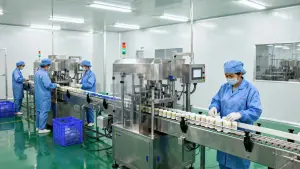
Our GMP-certified facility in Guangzhou handles sublingual tablet, lozenge, spray, and strip formats. Below are the critical factors we evaluate with every project.
1. Formulation Design and Bioavailability Optimization
At SREKE, we begin every sublingual project with a comprehensive formulation review. Key considerations include:
- Particle size reduction — Micronization or nanosizing active ingredients (typically 1–10 µm) increases surface area and accelerates mucosal absorption. Our in-house micronization capabilities support this without requiring third-party outsourcing.
- Bioavailability enhancers — We formulate with GRAS-listed excipients such as bioflavonoids, permeation enhancers, and mucoadhesive polymers that support sustained contact with the sublingual mucosa.
- Taste masking — Many bioactive compounds have bitter or astringent profiles. Our flavor engineering team uses encapsulation and natural masking agents to ensure consumer acceptability while maintaining efficacy.
- Dissolution profile — Sublingual tablets must dissolve within 30–120 seconds. We optimize disintegrant systems (e.g., croscarmellose sodium, sodium starch glycolate) to achieve target dissolution without compromising tablet hardness.
2. Regulatory Compliance and Ingredient Safety
At SREKE, regulatory compliance is non-negotiable. Our formulation team ensures every sublingual product meets the following standards:
- FDA compliance — All ingredients comply with 21 CFR Part 111 (cGMP for dietary supplements) and are listed on the FDA's GRAS (Generally Recognized as Safe) database where applicable.
- EFSA compliance — For European markets, we verify that all ingredients and health claims align with EFSA Authorized Health Claims regulations (EC) No 1924/2006 and the EU Novel Food Catalogue.
- NSF/USP verification — We source raw materials with Certificates of Analysis from USP or equivalent pharmacopeial standards.
- Labeling compliance — Our team reviews all product labels for structure/function claim language that complies with FDA DSHEA guidelines, ensuring no disease treatment claims are made.
3. Manufacturing Process and Quality Control
Our sublingual production line operates under ISO 22000 and HACCP frameworks, with additional GMP certification from both China's NMPA and international auditing bodies.
- Direct compression and sublingual tablet presses — We use specialized tooling designed for sublingual formulations that require lower compression forces to ensure rapid disintegration.
- Environmental control — Relative humidity is maintained between 30–45% in production areas, as sublingual tablets are highly hygroscopic and moisture sensitivity directly affects dissolution performance.
- In-process testing — We perform weight variation, hardness, friability, and dissolution testing at defined intervals throughout each production batch.
- Finished product testing — Every batch undergoes identity, potency, microbial, heavy metal, and residual solvent testing before release.
4. Packaging for Sublingual Products
Proper packaging is critical for sublingual products due to their moisture sensitivity. At SREKE, we offer:
- Blister packaging — Aluminum foil/aluminum or PVC/Alu blisters provide excellent moisture barriers and individual unit dosing.
- Child-resistant bottles — For sublingual sprays and liquids, we provide CR packaging compliant with ISO 8317 and 16 CFR Part 1700.
- Desiccant inclusion — All moisture-sensitive formats include food-grade silica gel or clay desiccants.
- Private label and custom packaging — Our design team supports full brand customization, including outer cartons, inserts, and tamper-evident seals.
5. MOQ and Lead Time
We understand that brand owners need flexibility. Our standard sublingual manufacturing terms are:
- MOQ: 5,000–10,000 units per SKU for standard formats; custom formulations may require 3,000–5,000 units.
- Lead time: 4–6 weeks for formula development and sample approval; 6–10 weeks for full production after sample confirmation.
- Expedited options: Rush production is available for established formulas at an additional fee.
How SREKE Helps You Get to Market Faster
At SREKE, we streamline the path from concept to shelf. Here is how our process works:
- Consultation and feasibility assessment — Our technical team evaluates your concept, ingredient selection, and target market within 48 hours of initial contact.
- Formula development — We develop and refine your formula in our R&D lab, including stability testing under ICH-guided conditions (25°C/60% RH and 40°C/75% RH for 3 months).
- Sample approval — You receive 20–50 sample units for sensory and performance evaluation before committing to production.
- Regulatory documentation — We provide full COA, GMP certificates, and regulatory support documents for FDA New Dietary Ingredient (NDI) notifications or EU market entry where required.
- Production and quality assurance — Full-scale manufacturing with batch traceability and release testing.
- Shipping and logistics — We coordinate freight forwarding to your warehouse or directly to your fulfillment center, with temperature-controlled shipping available.
We also offer ODM programs with pre-developed sublingual formulas that can be launched in as little as 4 weeks from order confirmation, ideal for brands seeking speed to market.
Industry Trends and Market Opportunities
At SREKE, we track industry shifts closely to help our partners stay ahead. Several trends are shaping the sublingual supplement space:
- Rise of sublingual strips and orodispersible formats — Thin-dissolve strips offer portability and convenience, appealing to on-the-go consumers. This format is growing at an estimated CAGR of 8–12% globally.
- Peptide and nootropic demand — Sublingual delivery is increasingly used for peptides (e.g., BPC-157 analogs, glutathione) and nootropics (e.g., lion's mane, racetams) where oral bioavailability is limited.
- Clean-label and natural formulation — Consumers are driving demand for sublingual products free from artificial colors, flavors, and synthetic excipients. We support clean-label formulation with plant-based binders and natural sweeteners.
- Personalized nutrition — Custom-dosed sublingual formats enable personalized supplement regimens, a segment projected to exceed $20 billion globally by 2028.
- Emerging market opportunities — Asia-Pacific and Latin America are showing strong growth in sublingual supplement adoption, particularly in urban consumer segments.
Frequently Asked Questions
What is sublingual supplement manufacturing?
Sublingual supplement manufacturing involves producing dietary supplements designed to be placed under the tongue, where active ingredients are absorbed directly into the bloodstream through the sublingual mucosa. This bypasses the digestive system and first-pass liver metabolism, often resulting in higher bioavailability and faster onset compared to oral tablets or capsules.
What types of sublingual products can SREKE manufacture?
At SREKE, we manufacture sublingual tablets, sublingual lozenges, sublingual sprays, and sublingual dissolving strips. We also produce related formats including softgels, capsules, tablets, powders, gummies, and liquid supplements for brands seeking a multi-format portfolio.
What is the typical MOQ for sublingual products?
Our standard MOQ for sublingual products is 5,000–10,000 units per SKU, depending on format and complexity. Custom or ODM formulas may have lower MOQs starting at 3,000 units. Contact our team for a specific quote based on your product requirements.
How long does sublingual supplement production take?
For custom formulations, the typical timeline is 4–6 weeks for R&D and sample approval, followed by 6–10 weeks for production. For ODM formulas from our existing catalog, production can begin within 4 weeks of order confirmation. Expedited timelines are available upon request.
Are sublingual supplements compliant with FDA and EFSA regulations?
Yes. At SREKE, all sublingual products are manufactured in compliance with FDA 21 CFR Part 111 cGMP regulations and EFSA requirements for the European market. We ensure all ingredients are GRAS-listed or approved for use, and all label claims comply with DSHEA structure/function claim guidelines. We do not make disease treatment claims on any product.
Can SREKE help with international regulatory filing?
Yes. We provide regulatory support documentation including GMP certificates, COAs, ingredient sourcing documentation, and stability data. For FDA NDI notifications or EU market entry requirements, our team can coordinate with licensed regulatory consultants to support your filing process.
What quality certifications does SREKE hold?
SREKE holds GMP certification, ISO 22000 food safety management certification, HACCP certification, and is registered with China's NMPA. Our facility undergoes regular third-party audits to maintain compliance with international quality standards.
Does SREKE offer private label and custom packaging?
Absolutely. We provide full private label services including custom packaging design, labeling, and branding. Our in-house design team can create packaging that aligns with your brand identity while meeting all regulatory labeling requirements for your target market.
Ready to launch your supplement brand? SREKE provides GMP-certified OEM/ODM manufacturing for softgels, capsules, tablets, powders, gummies, and liquids. Contact us for a free quote or email [email protected] — we respond within 24 hours.