




The global dietary supplement market is projected to exceed $220 billion by 2027, and dosage form is one of the first technical decisions a brand must make. The right format influences manufacturing cost, stability, and consumer adherence. Matching the dosage form to the target audience and ingredient profile is essential for OEM success.
Why Dosage Form Matters for Your Brand
Oil-based actives such as vitamin D3 or omega-3s are typically filled into softgels, while probiotics and enzymes often require capsule or powder formats. Tablets work well for minerals and stable botanicals, and effervescent powders appeal to consumers seeking convenience. Choosing incorrectly can lead to stability issues or unnecessary packaging costs.
Key Factors to Consider When Choosing a Dosage Form
What is the MOQ for each dosage form?
At SREKE, standard OEM minimum order quantities vary by format. Softgels and hard capsules typically start around 100,000 units, tablets and powders at 50,000 units, gummies at 100,000 units, and liquids at 30,000 bottles.
Which dosage form has the longest shelf life?
Tablets and hard capsules generally offer 24 to 36 months of stability. Softgels typically range from 18 to 24 months, while gummies and liquids often require 12 to 18 months.
How do production lead times compare?
Lead times vary from 4 to 8 weeks after formula approval. Tablets and capsules move fastest because of mature tooling. Gummies and liquids may add 1 to 2 weeks.
Step-by-Step Process: From Concept to Finished Product
The typical OEM workflow at SREKE includes consultation, formula review, prototype development, packaging design, pilot batch production, and full-scale manufacturing with certificates of analysis.
Softgels vs Tablets vs Gummies — Which One Is Right for Your Brand?
| Dosage Form | Best For | Typical MOQ | Shelf Life | Lead Time |
|---|---|---|---|---|
| Softgels | Oil-based actives | 100,000 units | 18–24 months | 6–8 weeks |
| Tablets | Minerals, botanicals | 50,000 units | 24–36 months | 4–6 weeks |
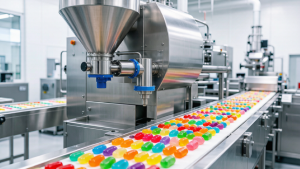
| Gummies | Consumer appeal | 100,000 units | 12–18 months | 6–8 weeks |
Frequently Asked Questions
Can one formula be made in multiple dosage forms?
Yes, but stability, taste, and release profiles must be revalidated for each version.
Does SREKE provide packaging design support?
Yes. SREKE offers bottle, blister, pouch, and carton options with label compliance review.
Are your facilities certified for international export?
SREKE manufacturing operates under GMP guidelines with quality systems designed to support export documentation.
What is the typical R&D timeline for a new formula?
Prototype development usually takes 2 to 4 weeks, followed by 4 to 12 weeks of accelerated stability testing.
Can I request samples before placing a bulk order?
Yes, samples of existing formulations can be arranged after an initial consultation.
How to Get Started with SREKE
Choosing the right dosage form affects formulation, packaging, and market positioning. SREKE supports brands through every stage of OEM, ODM, and CDMO development with transparent MOQs and documented quality systems. If you are looking for OEM/ODM/CDMO contract manufacturing services, please visit https://www.sreke.com/contact.php to submit your inquiry.
These statements have not been evaluated by the FDA. This content is for informational purposes only and is not intended to diagnose, treat, cure, or prevent any disease.